

Problem -vs- Analysis Tool
And Links

Problem -vs- Analysis Tool
We try to solve the five generic problems by applying a combination of the six different analysis tools to the seismic data. We have a matrix of generic problem -versus- analysis tool, figure 5. This report addresses the
contribution made by each analysis tool to solve each generic problem. Figure 5 illustrates the preference in the reported use of the various analysis tools, "case histories", to solve the different generic problems. The information and may not indicate the true preference in the use of the analysis tools within the industry; however, it may help.
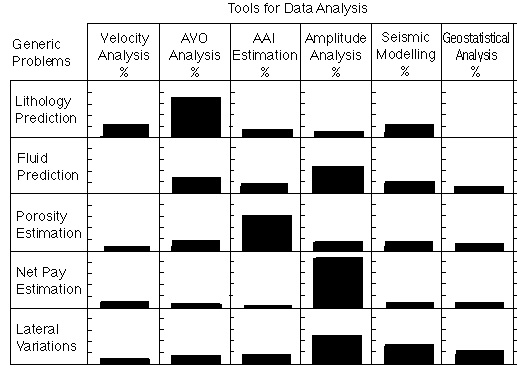
Figure 5 : The frequency of use of different analysis
tools to solve the different generic problem.
Frequently, the case histories show the use of only one analysis tool to solve a generic problem. A more constrained solution is likely if you use more than one method of analysis.
A "Frontiers" explorer may want to recognise reliable
DHIs.
An interpreter involved with field development may want to map a water
flood front. Both relate to the same generic problem, but the requirements
differ. Figure 6 illustrates one view of the changing requirements associated with each generic problem throughout a prospect's life.
The quantity and quality of the data to perform lithology and fluid
prediction increases throughout a field's history. This alters the approach used to solve a problem and the accuracy of the solution. This review addresses how the approach to each generic problem changes at different stages of a field's history.
The geological environment of the reservoir has an impact on the effectiveness of the different analysis tools. For instance, AAI is an effective exploration tool for carbonate rather than clastics due to the relatively more predictable rock properties of a carbonate platform. The
effectiveness of AVO analysis in clastic depends on the nature of the transition between the sand and the surrounding shales, AVO analysis is most
effective when there is a sharp transition. For these reasons the effectiveness of each analysis tool is examined in terms of the "geological
environment" of the reservoir.
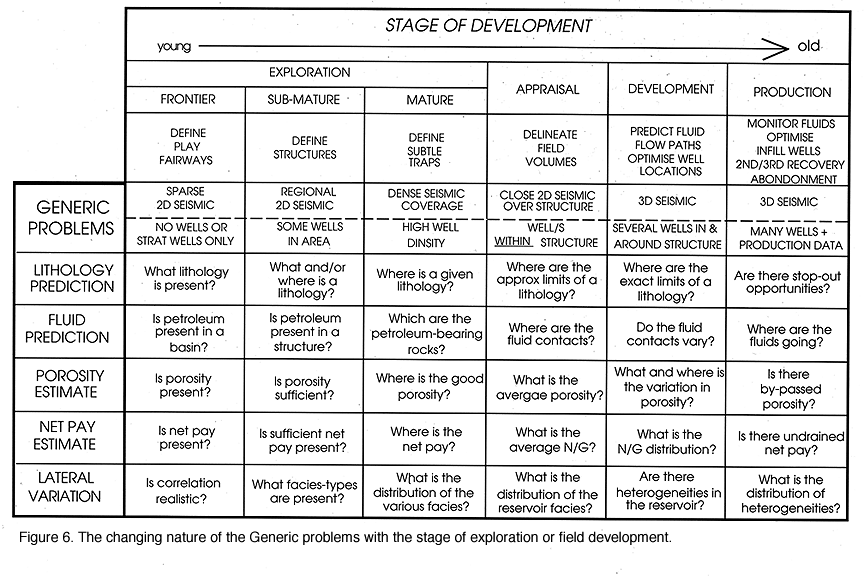
Figure 6: The Changing nature of the Generic Problem with
the stage of exploration or field developement.

